

A buyer spends forty minutes on the site visit, likes the unit, and then says the price is beyond their budget. The executive offers to check with management on the rate. The buyer says sure, and then stops answering calls. If price were really the blocker, the discount conversation would have kept them engaged. It didn't, because budget was the exit line, not the objection.
Why buyers reach for the budget line
Saying "it's above our budget" is safe. It ends the conversation without criticising the project, without admitting the spouse wasn't convinced, and without confessing they found the possession timeline risky. Culturally, it's the objection that requires no justification: nobody argues with your wallet. Which is exactly why it hides everything else.
- The real hesitation is often the location, the floor, the developer's delivery record, or a family member's veto.
- Sometimes the buyer is anchored to a competitor's quote and is testing whether yours will move.
- Sometimes the total cost surprised them: not the base price, but the add-ons they discovered late.
- And sometimes it is genuinely budget, but then they'll engage eagerly with payment-plan options, which is your tell.
The diagnostic is simple: a real budget objection leans into financing conversations. A polite-exit budget objection goes quiet the moment you offer solutions.
Responding without a discount
The wrong move is jumping straight to price flexibility: it trains buyers to open every conversation with the budget line, and it never addresses the hidden hesitation. The better move is to gently separate money from everything else: "Setting the price aside for a second, was this the right home otherwise?" Buyers answer that question honestly far more often than they answer "what's your budget?" honestly. Whatever surfaces is the real objection, and it's usually one you can actually work with.
Share the price band before the visit
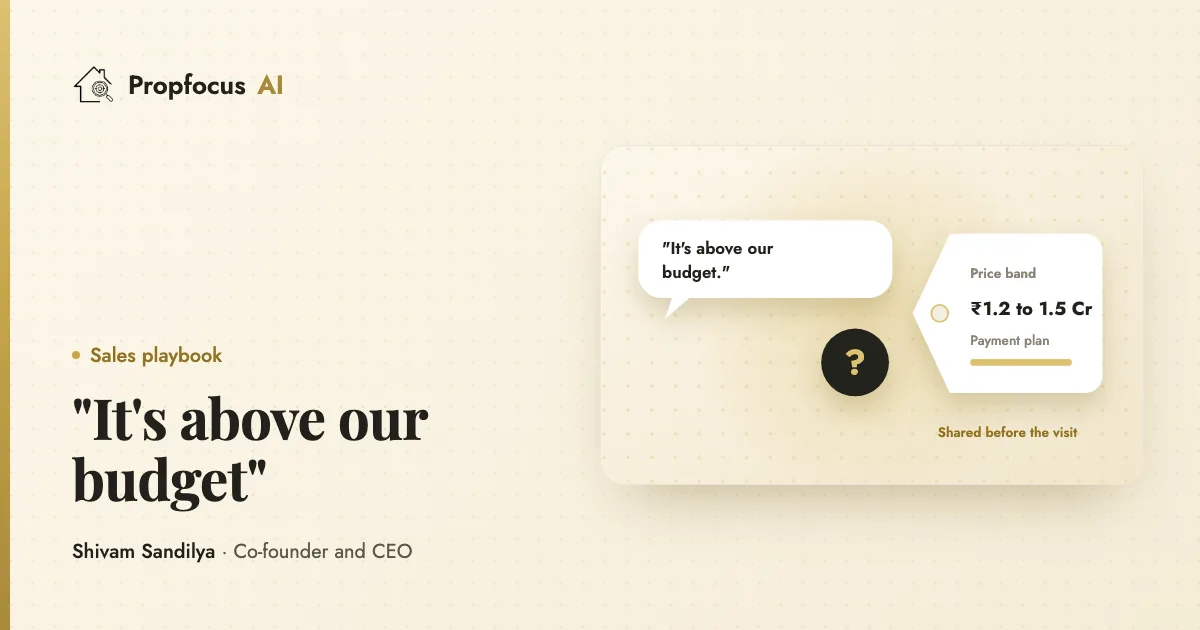
Many budget exits can be prevented in presales, before anyone drives to the site. Share a clear price band before the visit, not after it. The project page the buyer asked for can carry the price band and the payment plan, so a buyer for whom the numbers do not work filters out early, and a buyer who still books the visit has already accepted the range.
Keep exact negotiation for after the visit. The WhatsApp follow-up guide shows how to send the price band and payment plan when the buyer asks for them, and when to propose the site visit explains why a visit booked after that step holds.
Frequently asked questions
Should pricing ever be discussed before the site visit?
A clear price band, yes: it filters mismatched leads and saves everyone a wasted visit. Exact negotiation, no. Buyers who negotiate before seeing the unit are negotiating against a number, not a home.